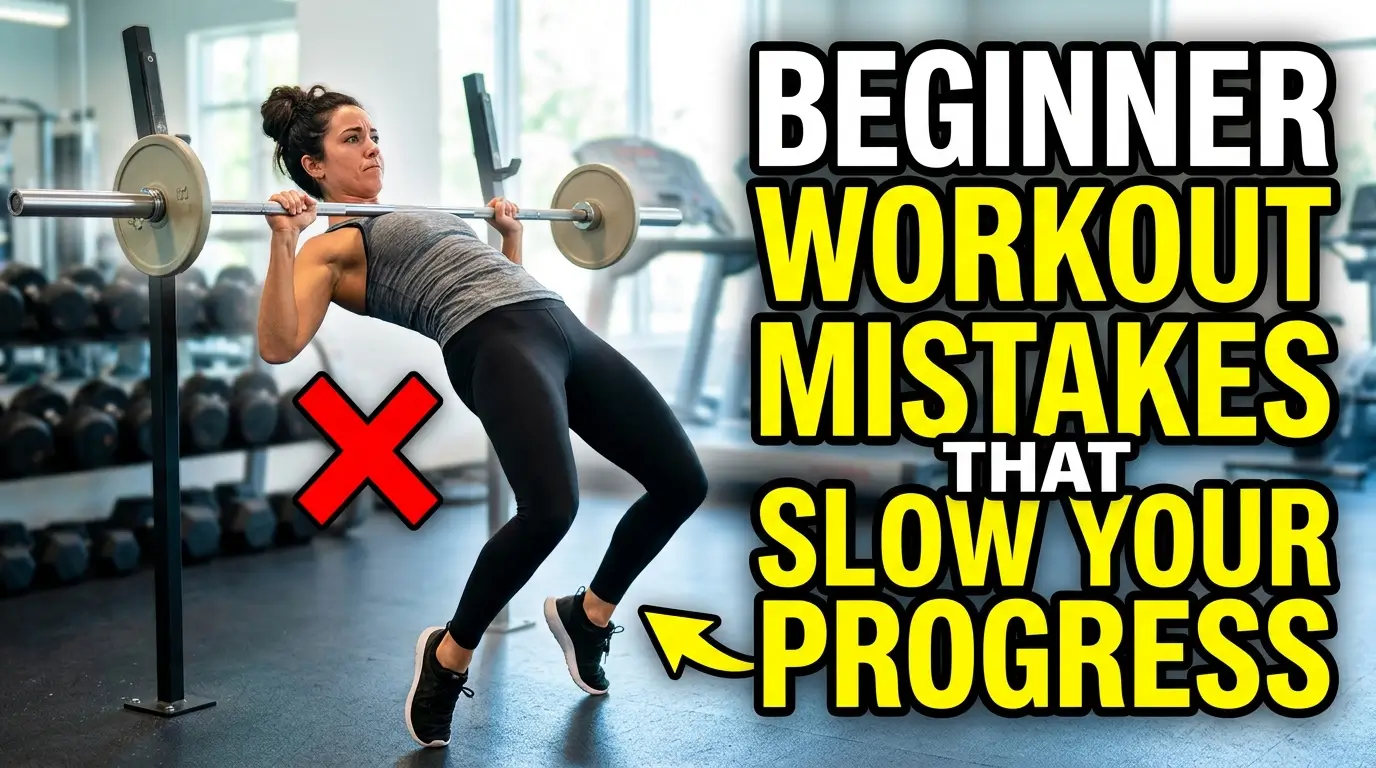
Beginner Workout Mistakes
Remember your first few weeks in the gym. Purchased new shoes. Swathed in sweaty shirts. Gazing at the mirror, nothing changed. Frustration sets in. You witness fitness influencers doing super heavy lifting. You think you are “no good,” with no improvements.
I recall that time. I did some random circuit training on machines for 6 months without any muscle growth! The issue stems from bad strategy. As for the small errors, they add up. They destroy your central nervous system and they prevent muscle growth.
Today we’re going to correct these basic exercise pitfalls.
The Physiology of Muscle Growth
Muscle growth occurs during recovery, which is not during the workout. Your central nervous system adapts first, making you stronger in the first two weeks. Progressive overload, sufficient protein production and careful training program over a period of some months are required for true muscle hypertrophy.
Most novices have a power surge in the initial two weeks. You believe that you are bulking up. You are wrong. Your brain is training to activate muscles. This is known as a neurological adaptation. True hypertrophic adaptations will only occur after a period of time.
In the gym you destroy tissue. Tissue is formed in bed. Any disruption of a good sleep and low protein intake will stop the whole process. Exercise is a stress factor. If the stress is not of sufficient magnitude, the body does not respond. Overtraining syndrome is a possibility when stress is high. Progressive overload is the key to striking the balance and making the player constantly adapt. This can be done by increasing weight, reps, or by the way you lift.
Programming Mistakes You Must Avoid
Pupil common beginner exercise mistakes are program hopping and building junk volume. Beginners should stick to a well-planned schedule with compound exercises. A change of exercise every week will not allow the body to adapt and avoid progressive overload.
Program Hopping
You come across an entirely new routine on TikTok. You do it for 3 days and see how it goes! A different routine is found on YouTube. You switch. This is known as program hopping. It undermines your progress. The stress must be repeated for muscle growth. Choose a beginner workout plan, such as a three-day split. Follow for 12 weeks. Measure your lifts. Set new weekly records with your numbers.
Junk Volume
There is also a big problem with garbage volumes. Performs 6 different bicep curl movements. Your arms get exhausted but you don’t stimulate any further growth. Additional sets raise your cortisol level. Cortisol is fattening and it does not allow for recovery. Focus on 3 quality compound movements. Compound exercise is one that activates more than one joint. These are the most cost-effective to build strength and metabolism.
Biomechanical Errors and Ego Lifting
Raising one’s own self is the number one cause of injuries in the gym at an early age, and also the number one reason for not progressing, according to expert trainers. When the range of motion is sacrificed in order to lift a heavy weight, the weight is not being lifted by the target muscle, but by your joints.
The Danger of Ego Lifting
You load up the barbell. You want to appear physically powerful. Do quarter squat. You just made the first mistake of any beginner. Mistakes in ego lifting destroy your joints. The full range of motion will create more muscle using less weight. Lower heavy dumbbells. Learn to use the mind-muscle connection. Regulate the descent of the lift.
Machine Weights vs Free Weights
The newbie discussion about machines vs free weights. They both have a function. Machines offer safety. Free weights require core stability.
| Equipment Type | Best Used For | Injury Risk |
|---|---|---|
| Machine Weights | Learning movement patterns | Low |
| Free Weights | Building core stabilization | Medium |
| Resistance Bands | Mobility and warm-ups | Low |
Squat vs Deadlift Form
There’s actually a different movement involved with squats vs deadlifts. A lot of novice climbers consider them to be the same exercise. When performing a squat, push the floor away. Your knees bend and hips lower. The deadlift involves hinging at the hips. Keep shins vertical and pull bar up legs. Low back pain is the result of bad squat vs. deadlift technique. If you don’t have the mobility, begin with a goblet squat with one dumbbell.
Recovery and Nutrition Failures
No amount of exercise will make up for poor nutrition. Protein deficiency and lack of sleep are the reason for the stalling of beginners. If you want to gain muscle you need a caloric surplus and adequate protein. To lose fat, a caloric deficit is necessary. CNS fatigue is caused by sleep deprivation.
Protein Intake for Beginners
You are what you eat! Fuel is needed for muscle protein synthesis. Aim for 1g of protein per pound of target body weight. Chicken, beef, eggs, and whey protein do the rest. If you don’t get amino acids, the broken muscle fibers remain broken.
Caloric Surplus vs Deficit
Weight is determined by calories in vs. calories out. Looking to get bigger pectorals? Consume in excess of calories. Looking to get rid of belly fat? Consume less calories than you burn. Many beginners hit their maintenance levels. For years their body remains the same. They ask themselves why they don’t have any gym statistics. Your calorie manipulation is going to be dependent on what you want to do, how you want to do it, and what your current situation is.
Sleep for Muscle Growth
The best performance booster is sleep. Less than 7 hours of sleep invites central nervous system fatigue. You feel weak. The thought of exercise makes you cringe. During deep sleep, human growth hormone is released. Prioritize rest. Make your bedtime as important as your gym session.
The Psychological Trap of Gym Anxiety
Gym anxiety prevents consistent exercising. Face this fear by visiting local gyms prior to enrollment, bringing in a certified personal trainer or going during off hours. Knowing the equipment and layout of the gym helps to decrease stress and increase confidence.
Going into a busy gym makes one feel intimidated. You believe you’re the only person who gets looked at. They do not. Individuals are all concerned with their own time for rest and music. The anxiety is justifiable. Gym anxiety is a valid physiological progress killer. It increases adrenaline before you even touch a weight.
Select a suitable environment. Try to find the most ideal local gyms in your city. Ask for a day pass. Find a gym that has a large number of squat racks. There are some commercial gyms that are geared towards beginners. There are other gyms that cater to the powerlifting community. Choose a mood for your objectives.
If there are problems with form, spend money on education. Search for a personal trainer near me. Book three sessions. Have a local professional correct your squat form. Physical cues are given by a local coach that a YouTube video is missing. You have a professional eye to fix minor mistakes before they turn to bad habits.
Essential Gym Tools and Apps
Don’t buy hundreds of dollars of unnecessary supplements. Purchase some essentials to monitor your progress.
Macro Tracking Apps
You should have an app such as MyFitnessPal or MacroFactor. They cost $10 to $15 per month. It’s important to have an understanding of daily calorie needs. Without knowing the portions of what you eat, you can expect no gym results.
Resistance Bands
These are great for warm-ups during the activity. When you walk into the gym you’re hit with the heavy load right off the bat. A cold muscle is tight and more easily injured. The basic set of bands is $20. Apply them to your joints before an intense workout.
Lifting Belt
Heavy compound movements are core stabilized by a belt. This is not a requirement for day 1. A $50 leather belt can provide a lot of assistance to your lower back after three months of regular use.
| Tool Name | Core Purpose | Necessity Level |
|---|---|---|
| Macro Tracking App | Tracking calorie intake | High |
| Resistance Bands | Mobility and warm-ups | High |
| Lifting Belt | Core stabilization | Medium |
Entity Glossary
- Hypertrophy: Enlargement of the muscle tissue cells due to exercise and strain.
- Progressive Overload: Increasing weight or reps over time for continual adaptation to physical challenges.
- DOMS: Delayed Onset Muscle Soreness. The soreness you experience the day after a challenging workout.
- BMR: Basal Metabolic Rate. How many calories you burn while at rest.
- RPE: What is your perceived level of exertion? A scale of between 1 and 10 indicating workout intensity.
- CNS: Central Nervous System. Brain and spinal cord controlling all muscles contractions.
- Active Recovery: Rest days action rest; light exercise such as walking to promote blood flow.
Frequently Asked Questions
Why Can’t I Lose Weight With Exercise?
You don’t have a clear strategy. You consume an inappropriate number of calories. You do not implement progressive overload. To gain muscle, you must consume more calories than your body requires, and make regular weight lifting increases. Go on and track your food and your lifts to solve this problem.
Is It Suitable for Novices to Exercise Daily?
No. It is possible to overtrain syndrome if you exercise every day. Rest is needed for your muscles to repair the torn fibres. The most successful three-day or four-day workout program for beginners. Allow time for rest and recuperation for your central nervous system.
Should Beginners Lift Low or High Weight to Do More Reps?
The primary factor for beginners is to learn the form first. Begin at lower levels and moderate sets of 8-12 repetitions. Develop your range of motion. Only add weight once you have developed the mind-muscle connection.
How Soon Are You Going to Get Results From Your Workout?
Neurological adaptations mean you will be stronger in two weeks. The changes in the body’s appearance will take 8-12 weeks of strict diet and training. Patience is mandatory.
What Is Happening to Me After I Have Been Working Out for a Couple of Weeks?
You built up central nervous system fatigue. It’s time for your body to rest. Take a deload week. Reduce exercise intensity by 50%. Get 8 hours of sleep per day. You’ll come back to the gym stronger than ever.
How to Begin Going to the Gym Without Being Anxious?
Choose off-peak traffic times. Look online for some information about the dimensions of the gym. For one week hire a personal trainer in that local area. A plan will remove the fear of looking like a beginner. Wear headphones and concentrate on breathing.
Would It Be Advisable to Use a Full-Body Split?
Yes. For beginners, it is best to split from head to toe 3 times a week. It strikes all of the muscle groups at just the right frequency. It creates a solid base. Only split after 6 months of regular lifting to a specialized split.
Conclusion
Preparation and patience are the key to avoiding being a beginner workout failure. Stalling is a normal aspect of the fitness trip. You have the means to solve your routine. DON’T change your program every week. Commit to one plan. Focus on the quality of your movements, rather than the amount of weight moved. Make eating and sleeping decisions to support your physical targets. Track your food. Track your lifts. You will develop an elastic body and obtain the desired figure.
Leave a Reply