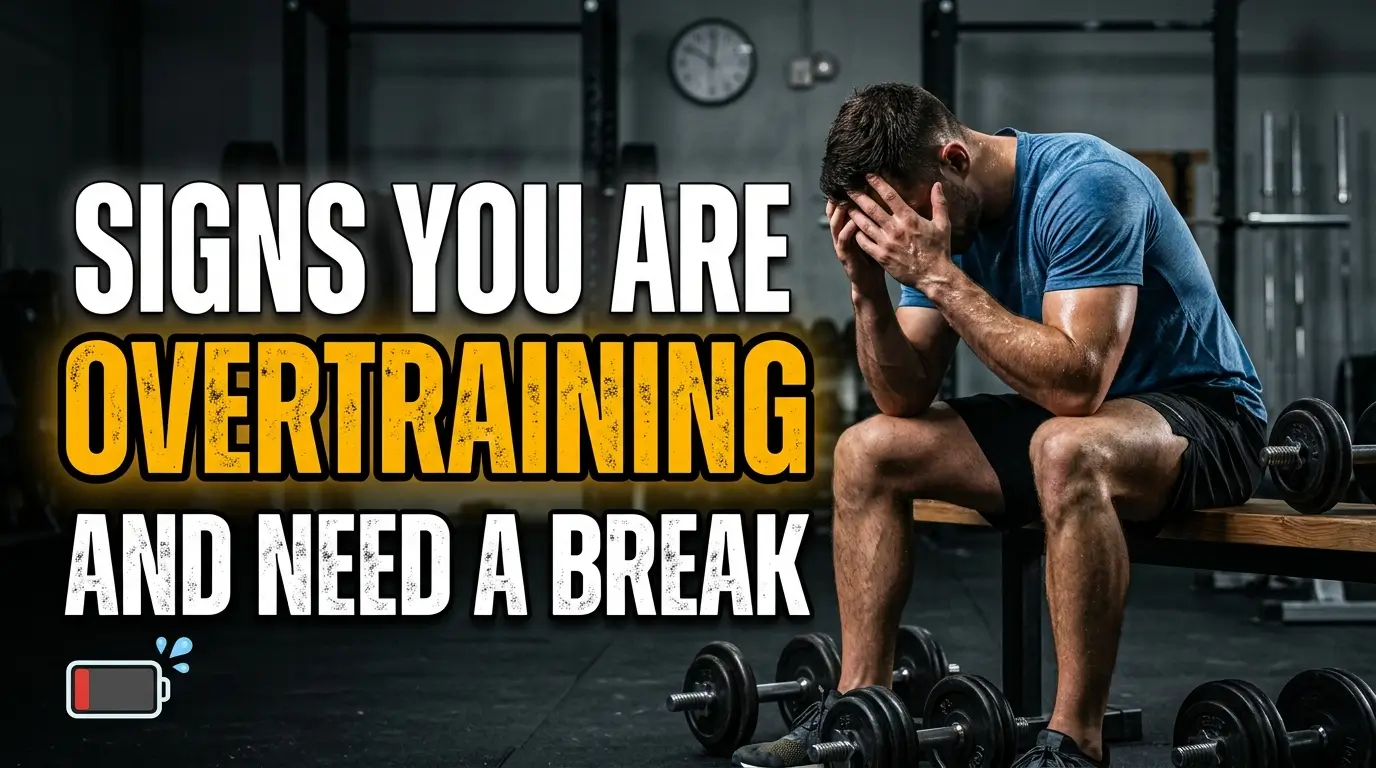
Waking up from bed is very difficult. Legs are as leaden as pipes, a common feeling sore associated with overtraining. Last month you showed up at the gym and loved it, but now you’re thinking about stepping foot on the floor and running for your life; remember to focus on rest and recovery to avoid overtraining and make sure you’re getting enough time to rest. Last month, you’ve been to the gym, loved it and now you’re thinking of hiding. You convince yourself that it’s just a matter of getting through. Consistency is the key, they all say, but it is also essential to help prevent overtraining.
What if it is your consistency that’s your issue; are you sure you’re getting enough calories to support your workouts?
We’ve all been in that situation where we need to listen to our body to prevent overtraining. You are after a personal best, you fall short and say to yourself, “More volume.” Increased cardio work. More weights. Less rest. It feels logical. The more input there is, the more output there will be, especially when you’re training for a specific goal.
That’s not how the body operates; overtraining syndrome causes physical symptoms that can hinder performance.
During training you actually destroy muscle fibers. Energy stores are used up. It is as if you are pushing your central nervous system. It’s not in training that gains occur, but in resting. Hammer gas pedal and never stop for gas — engine blows, especially if you’re training without adequate recovery and not getting enough calories. This is what Overtraining Syndrome is. It is real; the signs and symptoms of overtraining can affect anyone. It is dangerous to ignore the signs of overtraining syndrome. It can throw out of gear your project for months.
To see if you have gone past the “working hard” phase and into the “overtraining” phase, take a look at the following items.
What Is Overtraining Syndrome?
Overtraining Syndrome is more than being tired. It is a systemic (whole body) disorder of the nerves and hormones that control processes throughout the body. It occurs when training volumes are too high for a prolonged period before you recover.
It works similarly to a credit card. Energy (training) is spent, and recovered with rest and food. When you make the small balance for a few days it is a carry over. You can take care of that. The bank takes your car if you are paying the minimum payment on the card for a year, but maxing it out each month, just like how overtraining occurs when you don’t monitor your limits; you need to make sure you’re getting enough calories to fuel your workouts.
The bank in this instance, takes your strength, your mood and your immune system.
Physical Signs You Need a Break
Your body gives you a warning before an injury happens, often showing signs and symptoms of overtraining syndrome isn’t something to ignore. All that is necessary is to listen.
Elevated Resting Heart Rate
This is the most neutral red flag. Heart rate is fairly steady when you’re relaxed.
Monitor pulse in the morning, before getting out of bed, as it can help identify warning signs of overtraining. Several days in a row with 5 to 10 beats per minute more than usual is a sign your nervous system is in overdrive. It is in a state of “fight or flight,” which can be a response to the symptoms of overtraining. Stress relief is ongoing in your body while you are sleeping.
Persistent Muscle Soreness
Soreness is normal, but excessive soreness can be one of the signs you’re dealing with overtraining. Delayed Onset Muscle Soreness (DOMS) is a common feeling sore that may indicate the risk for overtraining if it persists. Typically presents itself 24 hours after exercise, and subsides within 72 hours, but adequate recovery time is essential to avoid overtraining.
When your legs hurt for 5 days, it could be one of the signs and symptoms of overtraining. That is not DOMS; it could be signs you’re dealing with overtraining. That is inflammation, a common symptom of overtraining. Constantly aching shoulder or “heavy” feeling all the time means that the muscles are not repairing. They are weaker than you are tearing them down.
You Get Sick Often
Energy demands of exercise lead to a temporary reduction in the immune system. It’s a small price to pay.
However, when you’ve caught all the colds in the office, or when your throat’s been a sore thumb for weeks, you have lowered defenses. Your body is focused on survival and not on performance, especially when you’re experiencing signs you’re overdoing it; make sure you’re getting enough time to rest and recover. It can’t fight the virus, and at the same time build the muscles if you’re overdoing your training without proper recovery.
Insomnia and Poor Sleep
When you’ve had a grueling leg day, you want to get the same kind of sleep a baby gets. Growth hormone is highest at this time.
You’ll have an issue if you feel exhausted but keep lying in bed gazing at the ceiling. Your cortisol is too high, which can be a warning sign of overtraining. This stress hormone prevents the ability of melatonin from doing its job and helps to keep your brain awake. Bad sleep stifles recovery and recovery leads to more stress and then back to bad sleep. It’s a vicious cycle.
Psychological and Emotional Indicators
Overtraining takes its toll on your brain, just as it does on your muscles, which can be a sign that you’re working out too much. The first thing to be lost is the mental aspect.
Irritability and Mood Swings
Are minor things driving you crazy when you’re experiencing symptoms of overtraining? Furious about traffic? Remember to listen to your body and prevent overtraining by making sure you’re allowing adequate recovery. Are you easily drawn into arguing with your spouse for seemingly innocent reasons?
Too high cortisol has an impact on the neurotransmitters. Serotonin and Dopamine levels decrease. You are feeling stressed, irritated or sad. If you are unable to control your “short fuse”, review if you’re experiencing signs you’re overdoing it. training log. Can be a symptom of CNS fatigue.
Loss of Enjoyment
This is definitely the saddest one. At one time, you enjoyed picking people up. You were a big fan of running. It now feels like a chore, which can be a sign that you’re working out too much without adequate recovery.
You don’t like the exercise. You do not get any satisfaction once you’ve done it. This is apathy. It’s a protective mechanism. Your brain is trying to protect you from injuring your brain!
Performance Metrics and Red Flags
The scale is accurate, but the barbell isn’t.
Your Lifts Are Going Down
The idea of hitting a personal best every session isn’t a good one and can lead to overtraining syndrome. Progress is non-linear, especially when you’re training for a specific goal and may encounter setbacks. You should not be getting weaker, however.
If you can bench last month with 225 lbs. and today have trouble with 205 lbs. Then you have a problem if you’re experiencing symptoms of overtraining! Overtraining This means that if you are running more miles but your running times are getting slower, you might be experiencing the physical symptoms of overtraining syndrome. Stop where you need to stop; this is the clear indication that you need to rest and recover.
Loss of Coordination
Exercise is an ability that can be hindered if you’re experiencing symptoms of overtraining. It calls on the brain to communicate with muscles, which is crucial to help you avoid overtraining.
Over training can cause this signal to become vague. You feel clumsy. Dumbbells feel awkward. Simple movements are causing your form to break down. When injuries occur. Without being able to control your own body, you shouldn’t be putting any more weight on it, as it increases the risk for overtraining.
Overreaching vs. Overtraining
It is not the same thing to push too hard as to break yourself.
| Feature: signs and symptoms of overtraining can manifest in various ways. | Functional Overreaching | Overtraining Syndrome |
|---|---|---|
| Duration | Short term (a few days to 2 weeks) can be crucial for recovery from overtraining, especially if you are feeling sore. | Long term (months) of inadequate rest and recovery can lead to chronic fatigue, and treatment options for overtraining syndrome aren’t something to take lightly. |
| Recovery | Extra rest (3–5 days) restores it, ensuring you are getting enough recovery to bounce back effectively. | Does not resolve with standard rest |
| Result | Supercompensation (you get stronger) can only happen if you ensure you’re getting enough time to rest and recover. | Performance decline and burnout are common signs of overtraining syndrome. |
| Mood | Slightly fatigued | Apathy or very irritable feelings can be signs you’re experiencing overtraining syndrome. |
Functional overreaching is a means to an end. You work hard, recover, get better! Overtraining is a wrong choice. You work out, you work out even more, and then you bust.
The Role of Technology and Data
It seems like a lot of us have pretty bad instincts when it comes to assessing how tired we actually are. We usually think that we are okay until it is too late and we explode.
This is how technology can lend a hand. Devices that you can wear on your wrist such as Whoop, Oura, or Garmin monitor Heart Rate Variability (HRV).
HRV is the measurement of time intervals between two consecutive heartbeats. If HRV is high, it signals that your nervous system is calm and that you are able to perform a workout. A low HRV will indicate that you are under stress.
If your watch says “Recover Today” and you ignore it to do a heavy squat session, you are borrowing energy that you do not have. Utilizing data eliminates ego from the equation, ensuring you’re training effectively without overdoing it. The numbers do not care about your “grind,” and they will not get offended.
How to Structure Your Recovery Break
Taking a break feels scary. You worry about losing muscle, but you’re experiencing symptoms of overtraining that can hinder your progress. You worry about getting fat, but understanding recovery from overtraining can help you maintain a healthy weight.
Let me be clear: you will not wither away in seven days, but you may experience fatigue if you push too hard without rest. It takes roughly two weeks of inactivity before significant muscle atrophy Training session begins, but make sure to give your body the rest it needs. You can afford a rest.
Step 1: The Hard Stop (Days 1–3)
Do not work out anymore if you’re overdoing it and risking recovery from overtraining. Exactly, completely! No “light jog,” please, and definitely no “active recovery,” either. Just relax on the couch. Read up on a good book. Take a nap.
It is your nervous system that has to get reset to recover from overtraining effectively. You, on the other hand, should bring down your training intensity if you’re experiencing signs you’re overdoing it. cortisol level. Even light movement can in some cases be a factor that will delay the reset.
Step 2: Active Recovery (Days 4–10)
In this phase, start moving around a bit, but do not put stress on your body.
- Go on a stroll.
- Take up yoga in a mild way.
- Work on stretches in a normal way to support your recovery time after intense workouts.
- Take a dip in the pool.
Your heart rate should be at a low level. Remain at less than 60% of your maximum. The intention is getting the blood flow to help in the removal of metabolic waste, not the breakdown of muscle, especially when you’re dealing with overtraining.
Step 3: The Return (Week 2+)
Getting your old PRs back might be tempting but refrain from doing that.
Firstly, halve the amount of work you were doing previously. For instance, if you were squatting 5×5, simply do 3×5 with a lighter weight. Gradually, add 10% of your previous week’s load. If everything is fine, you can continue. But if you feel really tired, then taking another deload day is better for you to ensure you’re getting enough time to rest and recover.
When to Seek Professional Help
Sometimes one rest week is not enough; you may need more time to recover to prevent overtraining.
If after two weeks of rest, you still feel worn out, it’s time to see a doctor for the symptoms of overtraining. It could be that you have a medical problem that is misunderstood as overtraining.
You should find a sports medicine physician or a physiotherapist. You can look for “sports medicine doctors near me” or “physiotherapist specializing in athletic recovery” to find someone in your area that way.
They can conduct a blood test for you. A shortage of iron, problems with the thyroid, or hormonal disorders can all cause the same symptoms as overtraining. An expert can eliminate the worry and provide you with a proper plan to recover from overtraining, especially if you’re experiencing symptoms.
Common Mistakes to Avoid
Mistake 1: Confusing Junk Volume with Hard Work
Junk volume means work that doesn’t give you a stimulus and may lead to overuse injuries. If you do 5 sets of an exercise when 3 sets are sufficient, it doesn’t mean that you’re training harder; in fact, you might be overdoing it and not getting enough time to rest. It only means you will be more tired. So, concentrate on intensity.
Mistake 2: Ignoring Nutrition can hinder your ability to recover from overtraining.
Eating a donut and drinking a soda are not going to help you recover. You need protein, carbs, and calories when you are training hard to ensure you are getting enough nutrition for optimal recovery. Being underfueled is a sure way to burnout. Make sure you’re eating enough to sustain your level of activity and support recovery from overtraining.
Mistake 3: No Plan
Random workouts give random results. You can help yourself by following a program with deload weeks built in. Also, don’t forget that you have to plan your rest days as well to prevent overtraining syndrome and give your body time to recover.
FAQs
How Many Days Should I Rest If I Overtrained to give your body enough time to recover?
The time needed hinges on severity. Usually, 3 to 5 days are enough for mild overreaching, but ensure you have enough recovery to prevent overtraining. On the other hand, full-fledged Overtraining Syndrome This may necessitate a couple of weeks or more to help prevent overtraining. The main thing is to pay attention to your body’s signals. Do not hurry your comeback; make sure you’re fully recovered from overtraining first.
Can Overtraining Cause Weight Gain?
Absolutely. Persistently high cortisol levels caused by stress lead to fat storage; the belly area is a common spot for this. Besides, it might lead to water retention. So, you can appear “puffy” even if you are regularly exercising hard.
Is Sweating More a Sign of Overtraining?
Not really; it’s important to acknowledge when your body needs a break. There are some people who sweat more just because of genetics or their level of fitness. However, if you sweat excessively during a light workout that normally wouldn’t make you sweat, this could mean your nervous system is disturbed.
Will I Lose My Gains If I Take a Week Off?
Definitely not. Actually, it’s possible you will be stronger when you resume. Your muscles get the chance to repair glycogen and heal micro-tears. It is after a good break that most people set a new personal record.
Does Overtraining Affect Libido?
It may. Stress without a break brings down testosterone while cortisol goes up, which can lead to overtraining. This hormonal disturbance may reduce libido drastically. It is the body doing the signal that it is too exhausted for reproduction since it is fighting for survival, which may also be one of the warning signs of overtraining; make sure you’re getting enough time to rest and recover.
Is 6 Days a Week Too Much?
That depends on the individual, but for most a resounding yes. Four days per week of hard work is a typical maximal limit most natural lifters live by. Enhanced recovery accompanying pros training several times a week allows them to do more. Six days of heavy lifting by natural lifters can be considered a sure way to burnout, especially if you’re not making sure you’re getting enough time to rest and recover, which is a treatment option for overtraining syndrome.
How Do I Tell the Difference Between Laziness and Overtraining?
The feeling of laziness disappears once you engage in some physical activity, which is the best way to treat overtraining. After warming up, everything seems fine. In the case of overtraining, it actually worsens with exercise. You warm up but still feel heavy, slow, and without motivation, which are signs you’re experiencing overtraining. A prolonged lack of motivation could be, it is not laziness.
Leave a Reply